
 SMS/Fast Response: +61 468 089 155
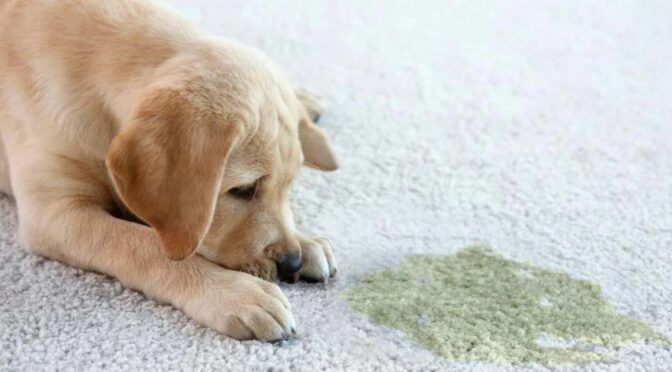
Pet stains behave very differently on carpet and upholstery. Carpet absorbs liquid deep into its fibres and underlay, which can trap bacteria and cause smells to return over time. Upholstery is more delicate and holds moisture inside foam, making over-wetting risky and odours harder to remove. Treating both surfaces the same often leads to lingering smells, health concerns, repeat pet accidents, and unnecessary stress. Understanding the differences in pet stain cleaning helps protect health, comfort, furniture, and long-term wellbeing.
Living with pets brings a lot of joy, comfort, and companionship. It also brings the occasional accident. Even well-trained pets can have off days, especially when they are young, ageing, anxious, or unwell. When a stain appears, most people focus on making it disappear as quickly as possible. What often gets overlooked is that not all surfaces react the same way to pet stains, especially when comparing carpet vs upholstery pet stains.
Carpet and upholstery might both look like fabric, but they are built very differently. Because of that, pet stains behave differently on each surface. Understanding these differences helps protect your health, your home, your furniture, your family’s comfort, and even your finances. It also helps reduce stress and frustration, which many pet owners quietly carry when stains and smells keep coming back.
Pet stains are not just surface marks. They are organic stains, which means they contain bacteria, proteins, and waste by-products. These substances soak into materials, bond with fibres, and can remain active long after the area looks dry. This is why pet stains often smell worse over time instead of better, especially in warm or humid conditions.
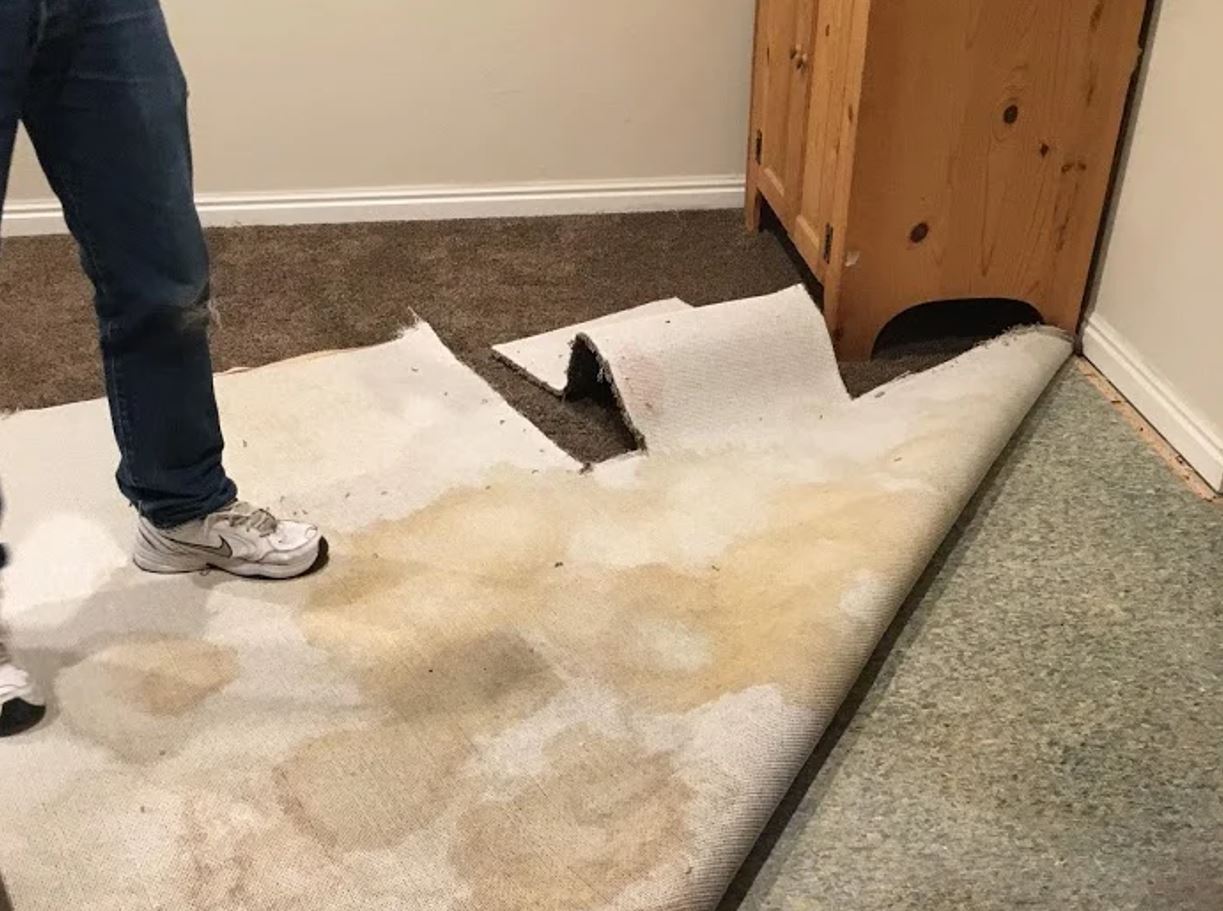
Carpet is designed to be soft, warm, and comfortable. To achieve this, it is made up of layers. There are the visible fibres on top, a backing underneath, and usually an underlay below that. When a pet accident happens on carpet, liquid does not stop at the surface. It moves downward, spreading through the fibres and into the backing and underlay. In some cases, it can even reach the flooring underneath. Situations like dog urine carpet vs sofa or cat urine carpet vs couch highlight just how differently surfaces absorb moisture.
This deep absorption is why carpet stains can be so stubborn. You might clean the surface and feel satisfied, only to notice a smell days or weeks later. That smell often comes from bacteria trapped below the surface, slowly releasing odour as moisture in the air reactivates it. From a health perspective, this can affect indoor air quality, especially in closed rooms or homes with limited ventilation. Following proper carpet pet stain cleaning tips is essential to avoid repeat problems.
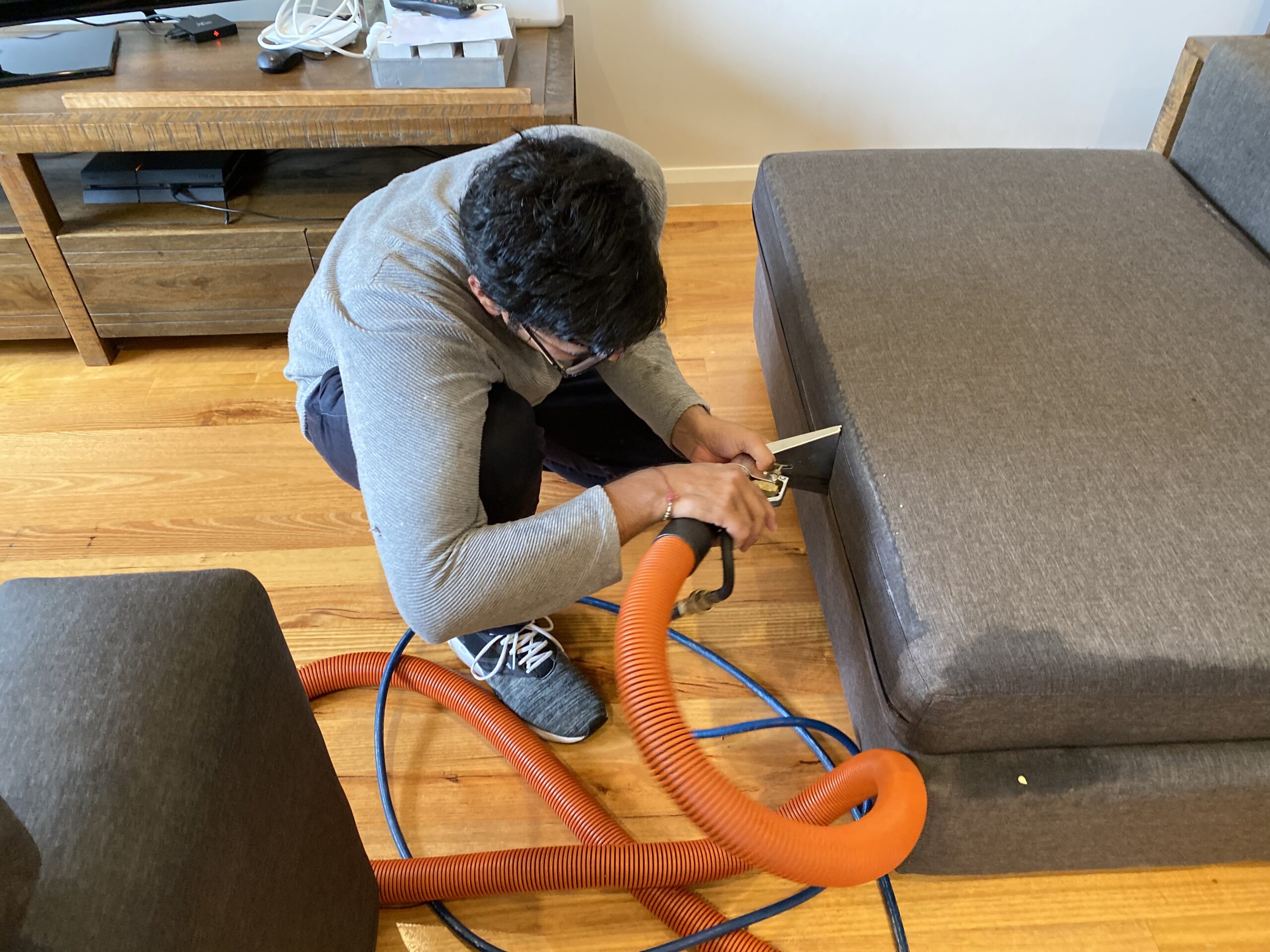
Upholstery behaves very differently. Furniture fabrics sit over foam, padding, or webbing rather than underlay. Upholstery is not designed to absorb large amounts of liquid. When a pet accident happens on a couch or chair, moisture tends to soak into the fabric and then quickly into the foam underneath. Once liquid enters foam, it becomes difficult to remove and slow to dry, which is why pet urine furniture cleaning must be handled carefully.
This is why upholstery stains often smell strongest when someone sits down. Pressure pushes air and moisture out of the foam, releasing trapped odours. Unlike carpet, upholstery cannot tolerate heavy soaking. Too much moisture can damage the fabric, loosen stitching, cause shrinkage, or lead to long-term odour problems that are very hard to fix. Effective upholstery pet stain removal requires precision rather than force.
These structural differences mean that stain removal techniques must be different. Carpet usually needs deeper treatment to reach hidden layers, while upholstery needs controlled, minimal-moisture care to avoid damage. Using the same method on both surfaces is one of the most common reasons stains and smells keep returning when trying to clean pet stains furniture.
Health is one of the biggest reasons this difference matters. Pet urine and other organic stains contain bacteria that can remain active if not properly treated. In carpets, bacteria can hide deep in fibres and underlay, releasing odours and microscopic particles into the air. In upholstery, bacteria can live inside foam, where it stays warm and damp for longer periods, making furniture pet odour removal more challenging.
For households with children, elderly family members, asthma, or allergies, lingering pet stains can quietly worsen symptoms. People may notice more sneezing, coughing, headaches, or general discomfort without realising that the source is a hidden stain beneath their feet or inside their furniture.
Mental and emotional wellbeing is also affected more than many people realise. Persistent pet odours can create embarrassment, especially when guests visit. People often worry that others can smell something they have become used to. This can lead to anxiety, social withdrawal, or constantly apologising for the home, even when it looks clean.
Repeated cleaning attempts that fail can also be emotionally draining. Scrubbing, spraying, and re-cleaning the same spot over and over can leave people feeling frustrated and defeated. Over time, this can create a sense that the home is out of control, which affects mood and overall wellbeing.
Family life can be impacted as well. Carpets are often where children play, crawl, and relax. Upholstered furniture is where families gather at the end of the day. When stains or smells linger, people may subconsciously avoid certain areas of the house. Cushions get flipped, rugs get moved, or rooms are used less often, changing how the home feels and functions when trying to remove pet mess upholstery.
Productivity and focus are closely tied to the environment. For people working or studying from home, lingering odours can be distracting. Even mild smells can reduce concentration, increase irritability, and make tasks feel harder than they should. A fresh, clean space supports clearer thinking, better focus, and a calmer state of mind.
There is also a financial side to consider. Carpet replacement can be expensive, especially if underlay or flooring has been affected. Once pet urine reaches these lower layers, removing the smell completely becomes very difficult. Upholstery is also a significant investment. Incorrect cleaning can permanently damage fabric, flatten foam, or shorten the lifespan of furniture.
Another important factor is pet behaviour. Pets have extremely sensitive noses. Even when humans can no longer smell a stain, animals often can. If any trace of odour remains, pets may return to the same spot and repeat the behaviour. This is especially common with carpet due to deep absorption and upholstery cushions where smells become trapped inside.
Humidity and temperature also play a role. In warmer months, moisture in the air can reactivate dried urine salts in carpet or upholstery, making smells suddenly noticeable again. In colder months, slow drying can trap moisture longer, increasing the risk of lingering odours. This is why stains sometimes seem to disappear and then come back without warning.
Ageing materials make the problem worse. Older carpets and furniture tend to be more absorbent due to wear and fibre breakdown. Stains sink deeper and are harder to remove. Newer materials may resist stains better, but still require the correct approach to avoid long-term issues.
Many people turn to DIY solutions without understanding these differences. Over-wetting upholstery, scrubbing carpet fibres too aggressively, or using the wrong products can all make stains worse. In carpet, surface cleaning may spread the stain wider while leaving bacteria underneath. In upholstery, too much liquid can soak into foam and never fully dry.
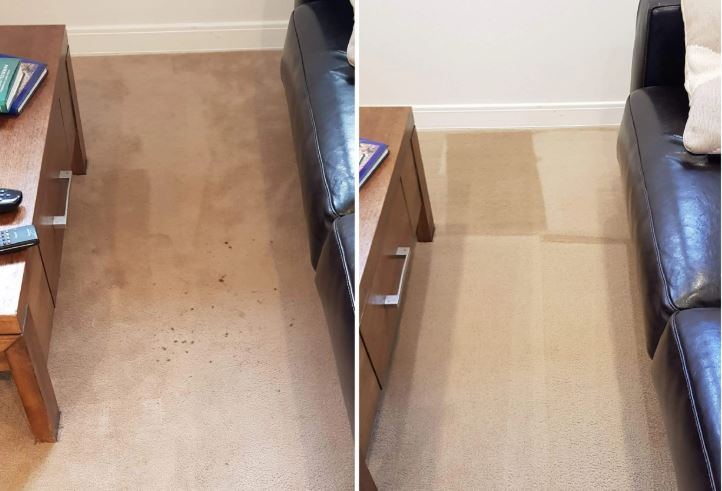
Drying is just as important as cleaning. A surface can feel dry on top while remaining damp underneath. This hidden moisture allows bacteria to survive and odours to return. Proper airflow, patience, and moisture control are essential parts of effective stain removal on both surfaces.
Pet stain removal is not one-size-fits-all. Carpet and upholstery may look similar, but they behave very differently when accidents happen. Carpet requires attention to deep layers that cannot be seen. Upholstery requires careful, gentle handling to protect delicate materials and internal padding.
When these differences are understood, pet ownership becomes less stressful. Homes feel fresher, families feel more comfortable, and pets are less likely to repeat the behaviour. A clean home is not just about appearance. It supports health, mood, productivity, relationships, and peace of mind.
By treating each surface the way it needs to be treated, pet owners can enjoy their homes without the constant worry of stains and smells returning.
If pet stains or odours keep returning, getting the right help can make all the difference.
Call 03 8583 9106, email petstainremovertoday@gmail.com, or visit petstainremover.com.au to learn more about proper pet stain and odour solutions for carpets and upholstery.
Key Takeaways
- Carpet and upholstery absorb pet stains differently, so they need different cleaning approaches.
- Carpet allows pet urine to sink deep into fibres and underlay, which is why smells can return over time.
- Upholstery holds moisture inside foam, making over-wetting risky and slow to dry.
- Treating carpet and furniture the same way often leads to lingering odours and repeat pet accidents.
- Hidden bacteria from pet stains can affect indoor air quality, health, and comfort.
- Lingering pet odours can impact mood, confidence, family life, and productivity at home.
- Pets may re-mark the same area if even small traces of odour remain.
Correct stain treatment and proper drying help protect carpets, furniture, and long-term wellbeing.
Case Study 1: Dog Urine in Carpet That Wouldn’t Stop Smelling
A family in a Melbourne townhouse reached out after noticing a persistent smell in their living room. Their dog had an accident on the carpet months earlier. At the time, the area was cleaned thoroughly and looked spotless. Despite this, the odour kept returning, especially on warm days.
This is a common issue with carpet vs upholstery pet stains, particularly when urine soaks deeper than the surface. In this case, the problem was not visible fibres but what sat underneath. Dog urine had travelled through the carpet pile into the backing and underlay. Surface cleaning removed the mark, but bacteria remained active below.
The family had tried several DIY methods using supermarket products, following online carpet pet stain cleaning tips, but each attempt only masked the smell temporarily. The situation also affected daily life. Guests noticed the odour, children avoided playing on the floor, and the dog repeatedly returned to the same spot.
This case highlighted the reality of dog urine carpet vs sofa scenarios. Carpet requires deeper treatment because liquid spreads downward and outward, unlike furniture where absorption behaves differently. Once the underlying layers were addressed properly, the smell stopped returning, and the dog no longer re-marked the area.
The biggest takeaway for the family was understanding that carpet stains often hide beneath the surface and need a different approach than furniture or hard floors.
Case Study 2: Cat Urine Trapped Inside a Couch Cushion
A couple living in an apartment contacted Pet Stain Remover after their cat urinated on their couch during a stressful move. The stain was treated immediately, but weeks later the couch began to smell whenever someone sat down.
Unlike carpet, upholstery absorbs liquid into foam rather than underlay. In this case, the cat urine had soaked through the fabric and into the cushion filling. While the surface appeared clean, pressure on the cushion pushed trapped odours back into the air. This is a classic example of cat urine carpet vs couch differences.
The owners had attempted pet urine furniture cleaning themselves, but too much moisture had been used. This made drying slow and allowed odours to stay trapped inside the foam. Over time, the smell affected their comfort, mood, and willingness to use the furniture.
This situation showed why upholstery pet stain removal must be controlled and precise. Furniture cannot be treated the same way as carpet. Over-wetting can worsen the problem and shorten the life of the couch. Once the correct method was used to remove pet mess upholstery, the odour stopped surfacing and the couch became comfortable again.
The couple also noticed an improvement in air freshness and peace of mind. Understanding the differences in pet stain cleaning helped them avoid repeating the mistake on other furniture in the future.



