

 SMS/Fast Response: +61 468 089 155
Baking soda and vinegar can help reduce pet stain smells on the surface, especially if the accident is fresh. However, they do not fully remove the uric acid crystals and organic compounds found in pet urine. That is why odours often return, especially in humid weather. For long-lasting results, the source of the stain needs to be properly broken down — not just masked. Removing pet urine properly protects your health, your home, and your peace of mind.
If you share your home with a dog or cat, you already know this truth: accidents happen.
It might be a new puppy still learning where to go. It might be an older pet who cannot hold on as well as they used to. Or it might simply be bad timing.
When it happens, most people head straight to the kitchen. Baking soda. Vinegar. A cloth. A bit of scrubbing. Done.
But here is the honest answer: baking soda and vinegar can help a little, yet they usually do not fully solve the problem. Many households rely on DIY pet stain removal solutions, especially common home remedies pet stains advice found online, but the results are often temporary.
To understand why, it helps to look at what pet stains really are, how these household products work, and why proper cleaning affects far more than just the smell of your carpet.
Let’s unpack it properly.
What Is Actually in Pet Urine?
Pet urine is more complex than most people realise.
It contains water, urea, uric acid, ammonia, proteins, bacteria and various salts. When urine first hits the carpet, it is mostly liquid. You blot it up and it seems gone.
But the trouble begins after it dries.
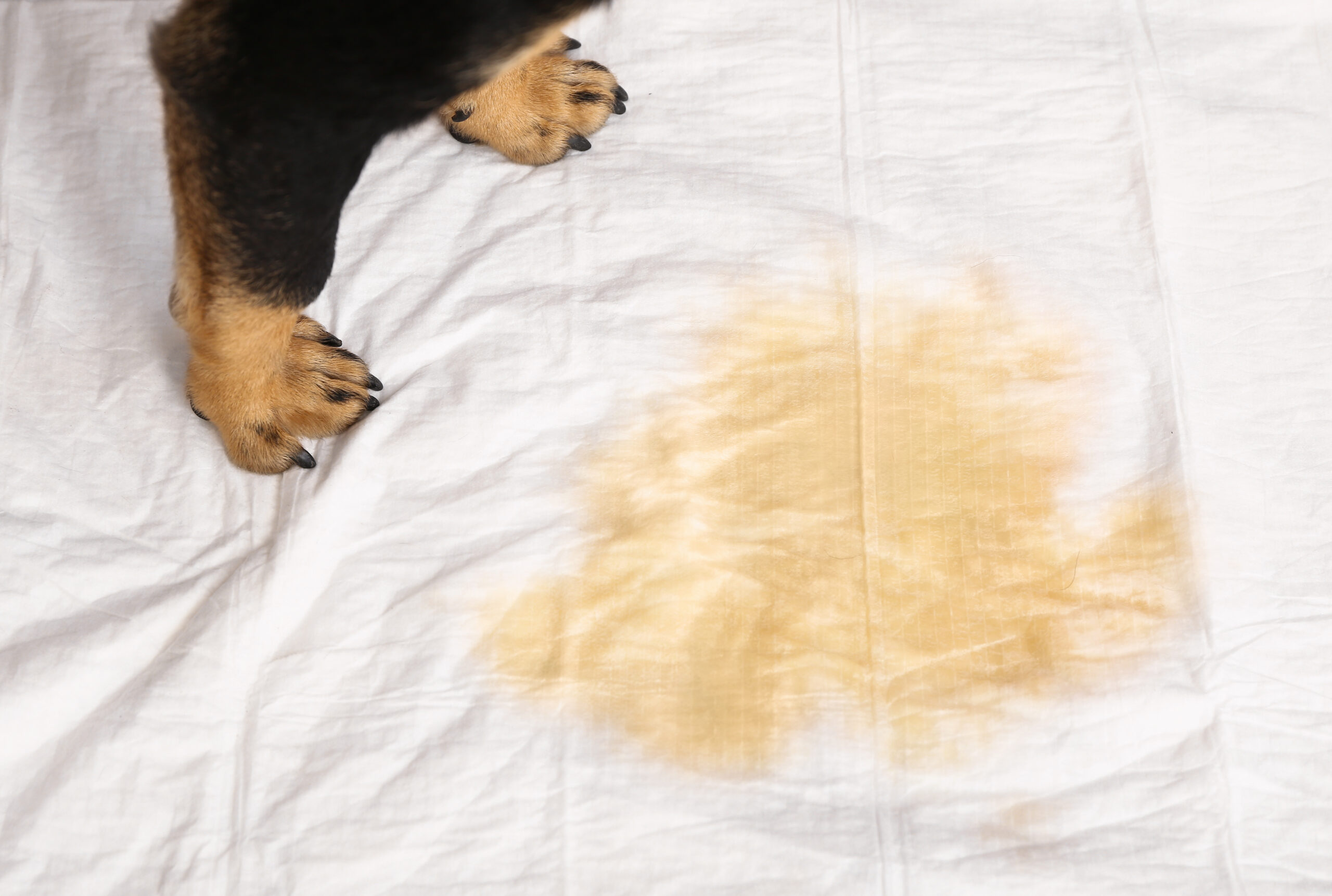
As urine dries, uric acid forms tiny crystals. These crystals bind tightly to carpet fibres and can sink into the underlay beneath. They do not simply evaporate. They stay there.
When humidity rises, even slightly, those crystals reactivate. They release odour again. That is why a room can smell fine for days and then suddenly smell unpleasant when the weather changes.
The smell returning does not mean you did not clean properly. It means the root cause was never fully removed.
How Baking Soda Works
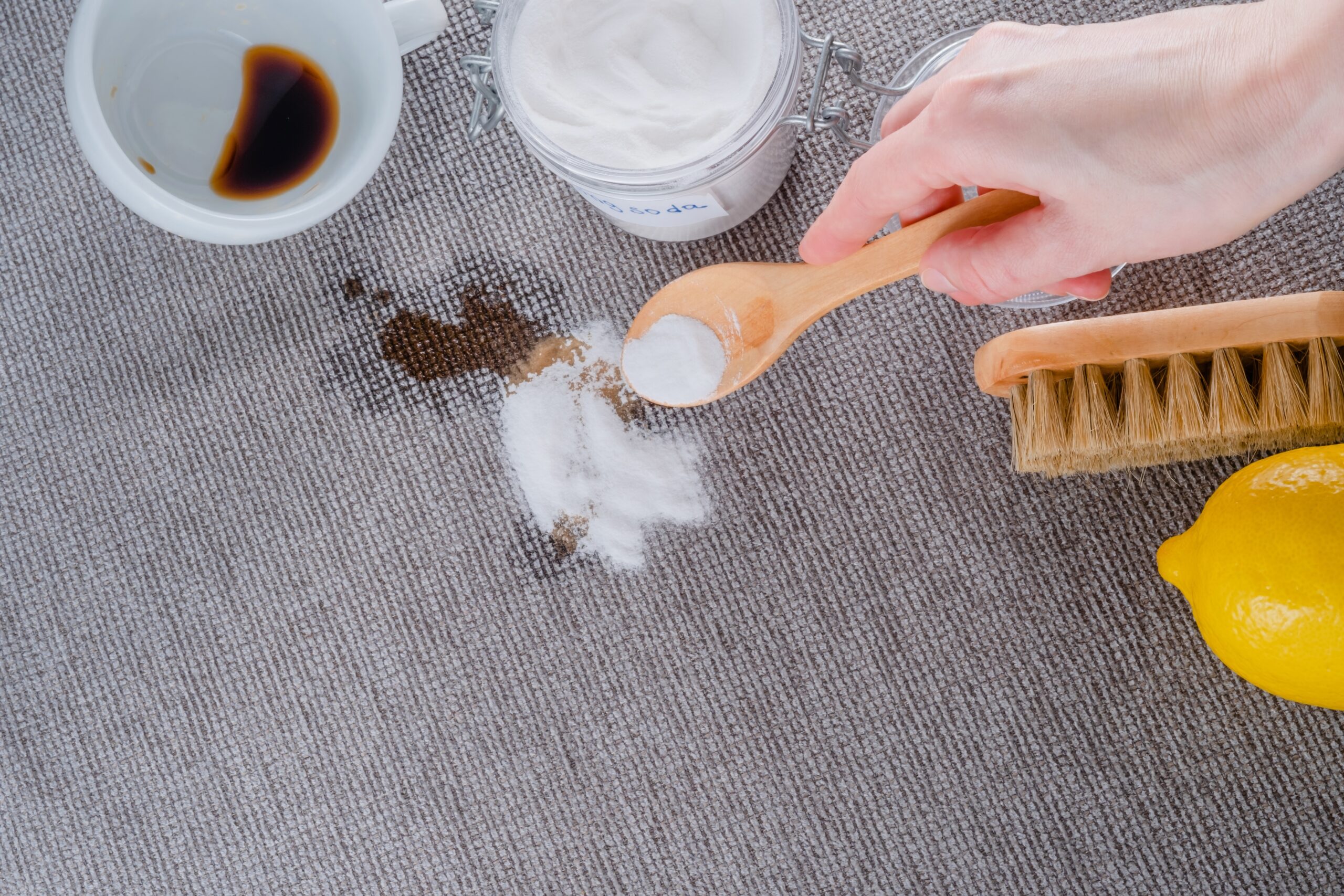
Baking soda is known as a natural deodoriser. It absorbs moisture and can trap certain odours. This is why many people try baking soda pet stains methods as their first response.
If you sprinkle baking soda over a freshly blotted accident, it can help draw out remaining dampness and reduce surface smell. It is inexpensive, easy to find, and often recommended in natural pet stain cleaning advice.
However, baking soda does not chemically break down uric acid crystals. It does not digest proteins. It does not kill all bacteria. It mostly absorbs and temporarily masks odour.
Think of baking soda like a sponge for smells. It soaks them up for a while. But it does not remove what caused them in the first place.
That is why the smell can return, even after cat urine baking soda cleaning attempts seem successful at first.
How Vinegar Works
Vinegar is mildly acidic. Pet urine becomes more alkaline as it dries, so vinegar can help neutralise some of that surface alkalinity. This is why vinegar pet urine cleaning is commonly suggested in online guides.
When diluted with water and applied carefully, vinegar may reduce sharp ammonia smells and loosen some light staining. It can also reduce certain bacteria on the surface. Many people try to remove dog urine carpet vinegar methods believing the acidity will dissolve the problem.
But vinegar also has limits.
It does not fully dissolve uric acid crystals. It does not penetrate deeply into thick carpet padding. It does not remove the organic compounds at the root of the smell.
When you mix baking soda and vinegar, you get fizz. The fizz looks powerful, but it is simply a chemical reaction producing carbon dioxide and water. It does not create a deep-cleaning solution. Many so-called pet odour vinegar solutions rely on this reaction, but the science behind it is limited.
The reaction finishes quickly. The stain underneath often remains.
Why DIY Cleaning Sometimes Makes It Worse
This part surprises many people.
Over-wetting a stain while trying natural carpet cleaning pets methods can push urine deeper into the carpet. Scrubbing hard can spread contamination sideways. Using strong chemicals without proper knowledge can damage fibres or set stains permanently.
Sometimes repeated DIY pet stain removal solutions actually make professional treatment harder later on.
The goal should always be gentle blotting first, not aggressive scrubbing.
The Health Side of Pet Stains
Lingering pet urine is not just a cosmetic issue. It can affect indoor air quality.
Urine left untreated can encourage bacterial growth. As it breaks down, ammonia vapours can irritate the respiratory system. In some people, especially children and those with asthma, this can trigger coughing, wheezing or headaches.
If moisture remains trapped under carpet, mould can develop. Mould spores affect breathing and overall health.
Young children crawling on floors are especially vulnerable. Their hands touch the carpet, then their mouths. Even if the stain looks gone after home remedies pet stains attempts, bacteria may remain.
Proper removal is not only about smell. It is also about safety.
The Emotional Impact on the Home
A home should feel safe and calm.
When there is a lingering odour, even faintly, it can create low-level stress. You may worry guests will notice. You may hesitate to invite friends over. You may feel embarrassed.
That constant awareness of “Does it smell?” affects mood more than people realise.
Environmental psychology studies show that unpleasant odours increase stress hormones and reduce relaxation. Clean, fresh environments promote calm thinking and emotional balance.
Removing a persistent smell often creates an immediate sense of relief.
How It Affects Family Relationships
Small problems can create tension over time.
One person may believe the area was cleaned properly using pet mess DIY tips, while another insists the smell remains. Frustration builds. Conversations turn into arguments.
Pets may also suffer. Dogs and cats rely heavily on scent. If even tiny traces remain, they may return to the same spot because they believe that is the correct toilet area.
When accidents repeat, people may become angry with the pet, not realising the smell is still detectable to them.
Breaking the scent cycle is crucial for training success.
Productivity and Mental Clarity
If you work from home, your environment matters.
Lingering smells, damp patches, or stained areas can subconsciously distract you. You may avoid certain rooms. You may feel unsettled without knowing why.
A clean environment supports clearer thinking. Research consistently links organised, fresh spaces with improved concentration and reduced fatigue.
When your home smells fresh, your brain relaxes. That improves productivity.
The Financial Angle
Repeatedly buying supermarket products for natural pet stain cleaning adds up. Trying multiple DIY pet stain removal solutions costs time and money.
In rental properties, untreated pet stains can reduce your bond refund. In owned homes, deep contamination can damage underlay, requiring expensive carpet replacement.
Addressing the issue properly early on is usually far more economical than relying solely on home remedies pet stains.
Why Enzyme Cleaners Are Different
Enzyme-based cleaners are specifically designed to break down organic matter.
They contain biological agents that digest proteins and uric acid. Instead of masking odours like many pet odour vinegar solutions, they destroy the source.
Imagine tiny workers breaking apart the stain molecule by molecule. Once the organic compounds are gone, there is nothing left to smell.
That is the key difference between absorption and elimination.
Final Thoughts
Baking soda and vinegar are helpful household tools. They can reduce surface odours and assist with light, fresh pet accidents. Methods such as baking soda pet stains treatments or attempts to remove dog urine carpet vinegar may provide short-term improvement.
But they do not fully remove the complex compounds found in pet urine. They absorb and neutralise temporarily. They do not eliminate the source buried within fibres and padding.
Proper removal matters for health, mood, family harmony, productivity, finances and overall well-being.
A truly clean home is not just about appearance. It is about comfort. It is about breathing easily. It is about feeling relaxed in your own space.
When dealing with pet stains, focus on removing the cause, not just covering the smell — even if popular natural carpet cleaning pets advice suggests otherwise.
Because every home deserves to feel fresh, safe and calm — for you and your pets.
Still dealing with lingering pet odours? Get it sorted properly.
Call 03 8583 9106, email petstainremovertoday@gmail.com, or visit petstainremover.com.au to restore your carpets and bring freshness back into your home.
Key Takeaways
- Baking soda can absorb moisture and reduce surface odours, but it does not break down uric acid crystals in pet urine.
- Vinegar can neutralise some smells, yet it cannot fully remove deep contamination from carpet fibres or underlay.
- Mixing baking soda and vinegar creates fizz, but the reaction does not eliminate the root cause of pet urine odours.
- Pet urine contains uric acid and bacteria that can reactivate in humid conditions, causing smells to return.
- Lingering pet stains can affect indoor air quality, trigger allergies, and create ongoing frustration at home.
- Repeated DIY attempts may push stains deeper or make them harder to treat properly.
- Enzyme-based treatments work differently by breaking down the organic compounds that cause odour.
- Acting quickly and treating the source — not just masking the smell — gives longer-lasting results.
- A properly cleaned home supports better health, improved mood, family harmony, and overall well-being.
Case Study 1: “We Cleaned It Three Times… Why Does It Still Smell?”
Family: The Martins
Location: Suburban Melbourne
Pet: 10-month-old Labrador
When the Martins brought home their new Labrador puppy, they expected a few accidents. What they did not expect was the lingering smell that refused to disappear.
At first, they relied on common DIY pet stain removal solutions. They searched online for pet mess DIY tips and tried every popular suggestion. They used baking soda pet stains methods by sprinkling it generously over the area after blotting. They also tried remove dog urine carpet vinegar techniques, mixing vinegar and water to neutralise the smell.
Each time, it seemed better.
For a few days.
Then the odour returned — especially when the weather warmed up. During humid afternoons, the lounge room would suddenly carry a sharp smell again. They began to feel embarrassed having guests over. The children started complaining. Frustration grew.
The turning point came when they learned that pet urine contains uric acid crystals that remain deep in carpet fibres and padding. The vinegar and baking soda had reduced surface odour, but they had not broken down the source.
The treatment focused on eliminating the underlying contamination rather than masking it. Once the uric acid crystals were properly broken down, the smell stopped returning — even during humid weather.
Within a week, the difference was clear. The room felt fresh again. The puppy stopped returning to the same corner because the scent marker was gone. The family felt relief — not just because the smell was gone, but because the stress surrounding it disappeared too.
The Martins learned that while home remedies pet stains advice can help in the moment, permanent solutions require addressing the root cause.
Case Study 2: “Our Cat’s Accident Almost Cost Us Our Rental Bond”
Family: Sophie and Daniel
Location: Inner-city apartment
Pet: 7-year-old indoor cat
Sophie and Daniel had lived in their rental apartment for four years without issues. Then their cat developed a urinary infection and began having accidents in one bedroom.
They acted quickly, trying cat urine baking soda cleaning methods they found online. They also experimented with vinegar pet urine cleaning and other natural pet stain cleaning approaches, hoping to avoid harsh chemicals.
Initially, the smell faded.
But during summer, the odour returned. It became stronger during humid evenings. With their final inspection approaching, panic set in. They worried about losing part of their bond due to lingering pet odours.
After multiple rounds of natural carpet cleaning pets techniques, they realised the issue had gone deeper than expected. The urine had soaked through the carpet fibres into the underlay.
The solution required properly breaking down the organic material at its source. Once treated thoroughly, the odour did not return — even after heavy rain increased humidity.
At the final inspection, the property manager noted that the apartment smelled clean and fresh. Sophie later said the biggest relief was not just passing inspection — it was finally feeling comfortable in their own home again.
They realised that while pet odour vinegar solutions and other household remedies can help temporarily, deeply set stains require proper removal of the uric acid crystals causing the problem.
Repeated DIY cleaning can also spread the stain sideways or push it deeper. The smell returning does not mean you failed — it means the source was never fully broken down. Proper pet stain removal focuses on reaching below the surface and eliminating the organic compounds causing the odour.
To properly remove old stains, the uric acid crystals need to be broken down at a molecular level. Enzyme-based treatments are designed to digest these compounds rather than just mask them. In severe cases, treatment may need to reach the padding beneath the carpet. Replacement is usually a last resort, not the first step.
The safest approach is to remove the source completely rather than layering multiple household chemicals. Proper pet stain removal treatments are designed to break down organic matter without leaving harsh residues behind. A thoroughly treated and fully dried carpet is far safer than one repeatedly sprayed with DIY mixtures.
If the scent remains at a microscopic level, your dog believes that area is still a toilet. Proper pet stain removal eliminates the odour at its source. Once the scent is gone, many repeat accidents stop because the “marker” is no longer there.
The key is controlled application. Over-soaking can spread the stain, while under-treating leaves residue behind. Assessment of how far the urine has travelled determines the right approach. Carpet removal is only necessary in extreme, long-term saturation cases.
Addressing stains early gives the best results. Even older stains can often be treated successfully if the underlay has not deteriorated beyond repair. Removing the odour source improves the likelihood of passing inspection and protecting your bond.
If accidents are frequent, immediate blotting followed by proper treatment prevents build-up. Repeated urine in the same area increases the strength of odour over time. Addressing each incident promptly reduces long-term damage and keeps your home hygienic and comfortable.
If smells intensify during warm or rainy weather, it is usually a sign that residue remains below the surface. Removing the underlying crystals prevents humidity-triggered odours from returning year after year.
Improper DIY treatments, especially strong acids or heavy scrubbing, are more likely to damage wool than professional methods designed specifically for fabric safety. Correct treatment removes contamination while preserving fibre integrity.
Another sign is repeated accidents in the exact same spot. This usually indicates that scent markers remain.
At that stage, surface-level cleaning is unlikely to solve the issue permanently. Deeper treatment focused on breaking down uric acid and organic residue is needed to fully resolve the problem.



